
 Save to feedthepins
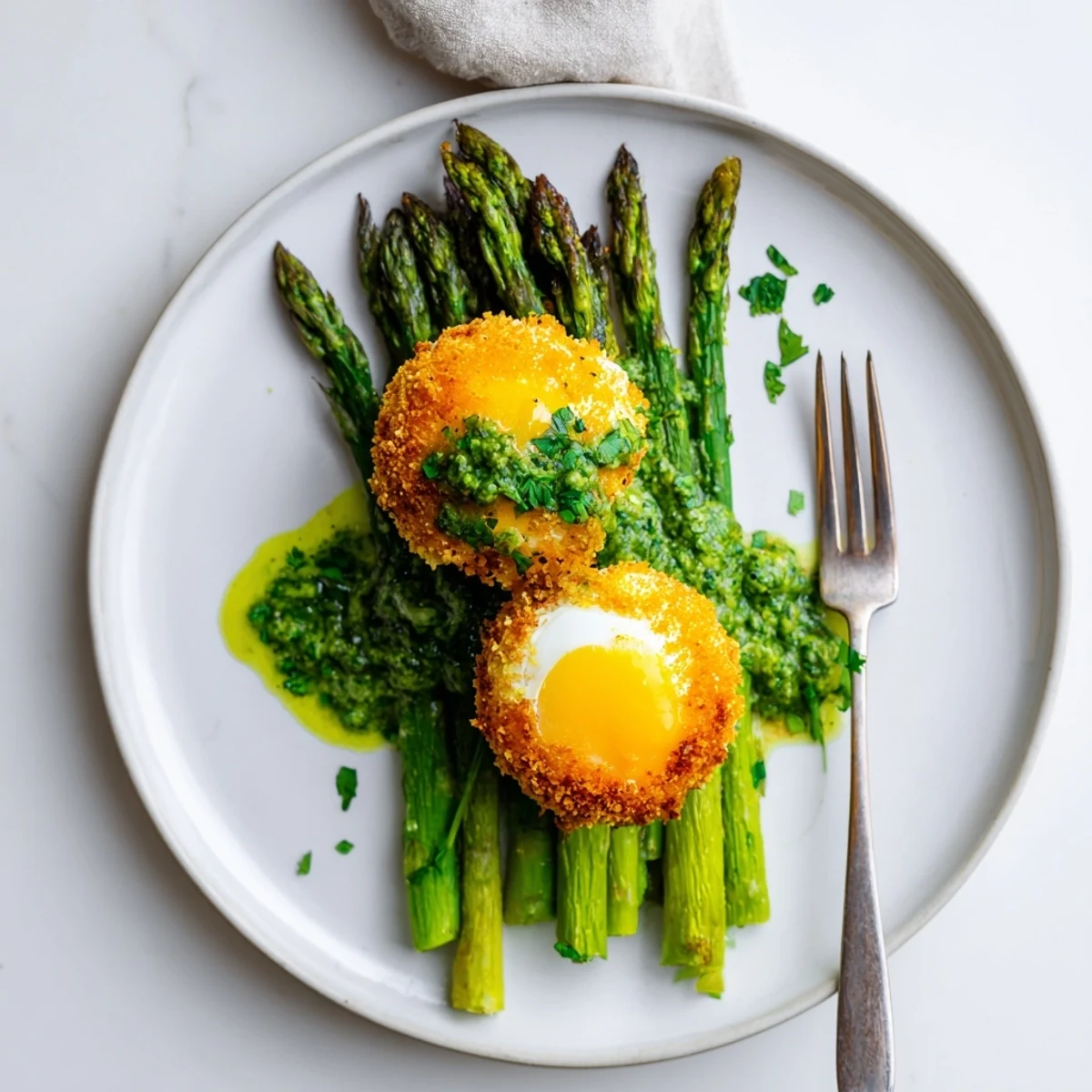
 Transform simple ingredients into an impressive appetizer featuring deep-fried egg yolks with a delicate crispy coating. The yolks develop a luxurious, warm center while the exterior becomes perfectly golden and crunchy. Paired with charred asparagus and a zesty herb sauce, this dish balances rich and bright flavors beautifully.
The technique involves briefly freezing the yolks before coating and frying, ensuring they hold their shape while achieving that irresistible crunch. The herb sauce adds freshness with parsley, chives, and tarragon, while lemon juice cuts through the richness.
The first time I watched a golden egg yolk shatter between my teeth, I was sitting at a tiny bistro in Lyon, pretending I understood the French menu while really just pointing at whatever the couple next to me was having. The yolk arrived perched on a bed of spring vegetables, its shell crisp and audibly crunchy, and when I bit through it the warm, liquid center spilled out like a secret I was never supposed to know. I spent three months trying to recreate that moment at home, ruining at least forty yolks before my friend Marta walked into my kitchen, watched me panic for ten seconds, and calmly told me to freeze them first. She was right, as usual.
I served this at a dinner party last April when the first decent asparagus finally appeared at the farmers market, and my friend David actually set down his wine glass to pay attention to his plate, which if you know David is essentially a standing ovation. The room went quiet for about fifteen seconds, which is the highest compliment any cook can receive.
Ingredients
- 8 large egg yolks, carefully separated: Free range yolks hold their shape better and the color is worth it alone, a deep sunset orange that no food coloring can match.
- 500 g green asparagus, trimmed: Snap off the woody ends by bending each stalk naturally, it breaks exactly where the tough part begins.
- 1 tbsp olive oil plus extra for sauce: A fruity, grassy oil makes the asparagus sing in a way that neutral oil simply cannot.
- 1/2 cup fine breadcrumbs: Panko works but finely crushed regular breadcrumbs create a tighter, more delicate crust around the fragile yolk.
- 1 tbsp grated Parmesan cheese: Optional technically but I have never once skipped it because the savory depth it adds to the coating is irreplaceable.
- 1/4 cup fresh parsley, 2 tbsp chives, 2 tbsp tarragon, all finely chopped: Tarragon is the quiet star here, lending a faint anise sweetness that makes people ask what is in the sauce.
- 1 small garlic clove, minced: One is enough, you want a whisper not a shout.
- 2 tbsp lemon juice: Fresh only, the bottled stuff tastes flat and this sauce deserves brightness.
- 1 tsp Dijon mustard: Acts as an emulsifier and adds a gentle heat that ties everything together.
- 1/2 cup extra virgin olive oil: Pour this in slowly while whisking and watch the sauce transform from a watery mess into something silky.
- Salt and black pepper: Season the sauce aggressively, it needs to stand up to the rich yolk and mild asparagus.
- Vegetable oil for frying: You need a neutral oil with a high smoke point, save your good olive oil for the sauce.
Instructions
- Make the herb sauce first:
- Whisk together the parsley, chives, tarragon, garlic, lemon juice, mustard, and olive oil in a bowl until everything looks cohesive and tastes vivid. Season with salt and pepper, then set it aside so the flavors can marry while you handle the eggs.
- Separate and freeze the yolks:
- Crack each egg carefully and slide the yolk onto a flour dusted plate, keeping the white for another use. Pop the plate into the freezer for thirty minutes until the yolks feel firm to the touch but are not frozen solid, because solid yolks will explode in the oil.
- Prepare the coating station:
- Mix the breadcrumbs and Parmesan together in a shallow bowl, stirring gently so the cheese distributes evenly throughout. Have a clean plate ready beside it for the coated yolks.
- Coat the yolks with care:
- Roll each chilled yolk gently in the breadcrumb mixture using your fingertips rather than pressing, because these are delicate little things that will break if you manhandle them. A light, even coating is what you are after.
- Fry to golden perfection:
- Heat vegetable oil in a small heavy pot to 170 degrees Celsius, then lower each yolk in gently with a slotted spoon and fry for thirty to sixty seconds until the crust is a deep amber gold. Lift them out quickly and drain on paper towels, because one minute too long turns liquid gold into hard boiled disappointment.
- Cook the asparagus:
- While the yolks chill in the freezer, toss your trimmed asparagus with olive oil, salt, and pepper, then grill or saute over medium high heat for five to seven minutes until tender with appealing char marks. You want a slight bite remaining, not limp stalks.
- Assemble and serve immediately:
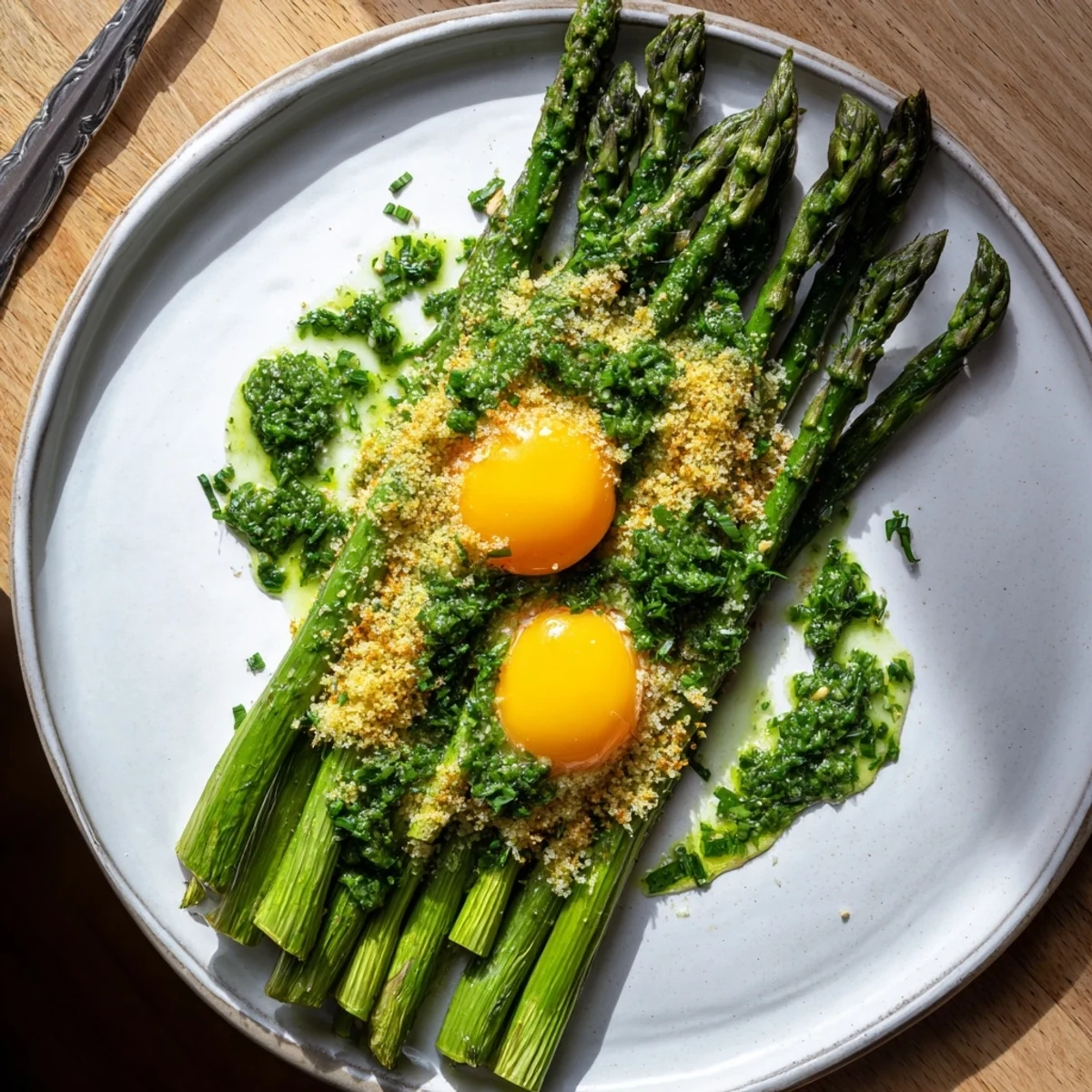
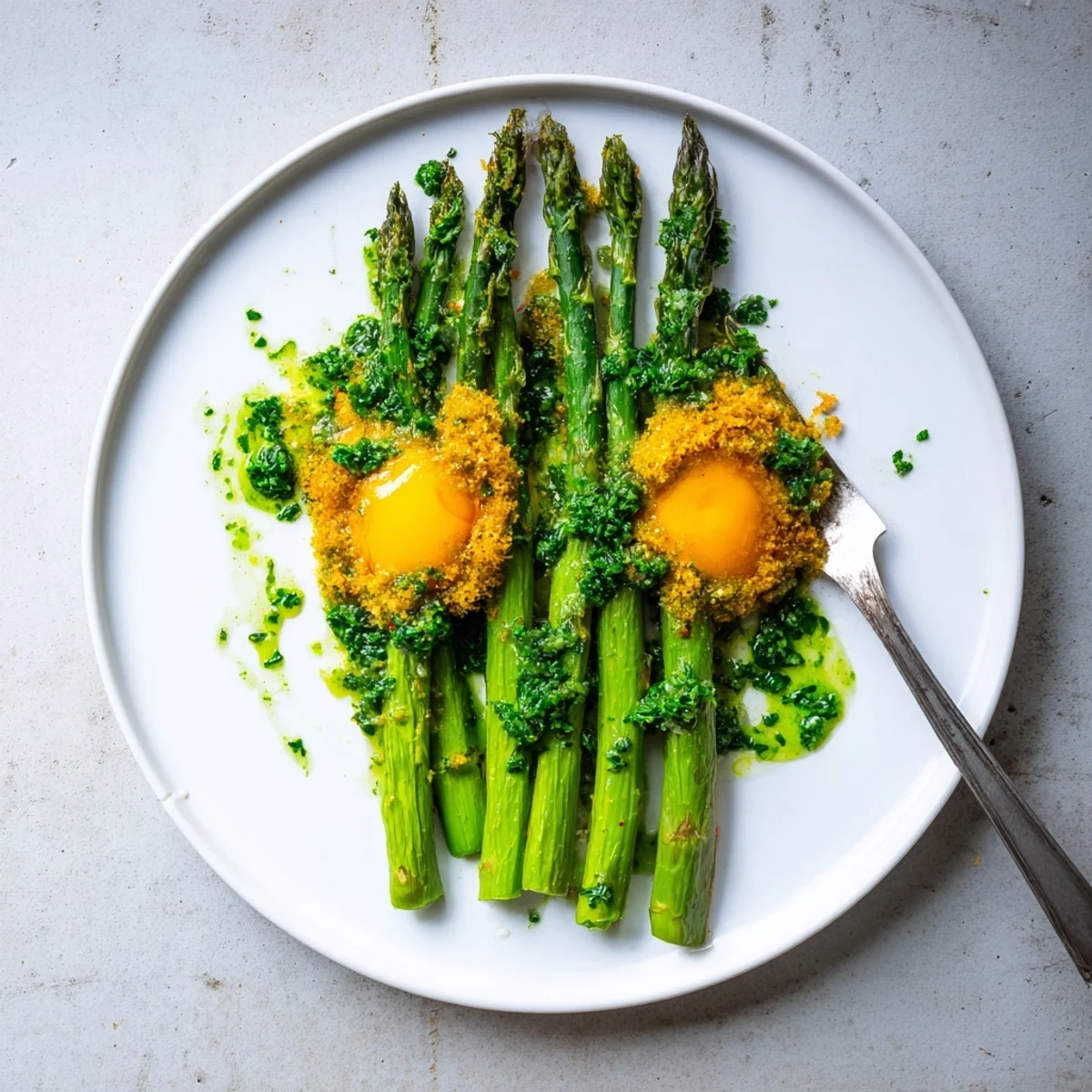
- Arrange the asparagus on warmed plates, place two crispy yolks on top of each serving, and drizzle the herb sauce generously over everything right before it heads to the table. The yolks wait for no one, so call your guests to the table before you plate.
 Save to feedthepins
 The most magical part of this dish is the moment a guest cuts into one of those golden orbs and the warm yolk spills out across the plate, pooling with the herb sauce around the asparagus like a painting you are allowed to eat.
Timing Is Everything With This One
I learned the hard way that you cannot pause once those yolks hit the oil, so have everything else plated and your guests seated before you start frying. The herb sauce actually improves after sitting for an hour, and the asparagus reheats gently in a warm oven without complaint, but the yolks demand to be served within two minutes of leaving the oil or they lose their magic entirely.
Swaps and Substitutions Worth Trying
If asparagus season has passed, broccolini or even thick green beans roasted until their edges blister make an equally worthy base for the yolks. For a lighter version, bake the coated yolks at 220 degrees Celsius for four to five minutes instead of frying, though the crust will be slightly less shatteringly crisp and more gently golden. The herb sauce also works beautifully spooned over grilled fish or roasted chicken, so make extra even if you think you will not need it.
What to Pour Alongside
A chilled Sauvignon Blanc or dry Riesling cuts through the richness of the fried yolks and echoes the lemon in the herb sauce beautifully. A glass of something cold and bright turns this from a clever appetizer into a proper occasion, even on a random Tuesday night when you just needed something beautiful on the table.
 Save to feedthepins
 Some dishes are just a trick you learn and then carry with you forever, and this is one of them. Serve it once and people will ask for it every single time they walk through your door.
Recipe Q&A
- → Why freeze the egg yolks before frying?
-
Freezing firms the yolks without making them completely solid, allowing them to hold their shape during the coating process while maintaining a luxurious, runny center when fried.
- → Can I bake the yolks instead of deep-frying?
-
Yes, bake at 220°C (425°F) for 4–5 minutes for a lighter version. The coating won't be quite as crispy, but you'll still achieve a golden exterior.
- → What vegetables work well as substitutions for asparagus?
-
Green beans, broccolini, or roasted zucchini make excellent alternatives. Choose vegetables that can be grilled or sautéed quickly while maintaining some crunch.
- → How far in advance can I make the herb sauce?
-
The herb sauce can be prepared up to 24 hours ahead and stored refrigerated. Bring to room temperature and whisk briefly before serving to re-emulsify.
- → What's the best oil temperature for frying the yolks?
-
Maintain oil at 170°C (340°F) for optimal results. Too hot and the coating burns before the yolk warms through; too cool and the coating becomes greasy rather than crispy.
- → Can I use dried herbs instead of fresh for the sauce?
-
Fresh herbs are essential for the bright, vibrant flavor profile. Dried herbs won't provide the same fresh taste or texture that makes this sauce special.