
 Save to feedthepins
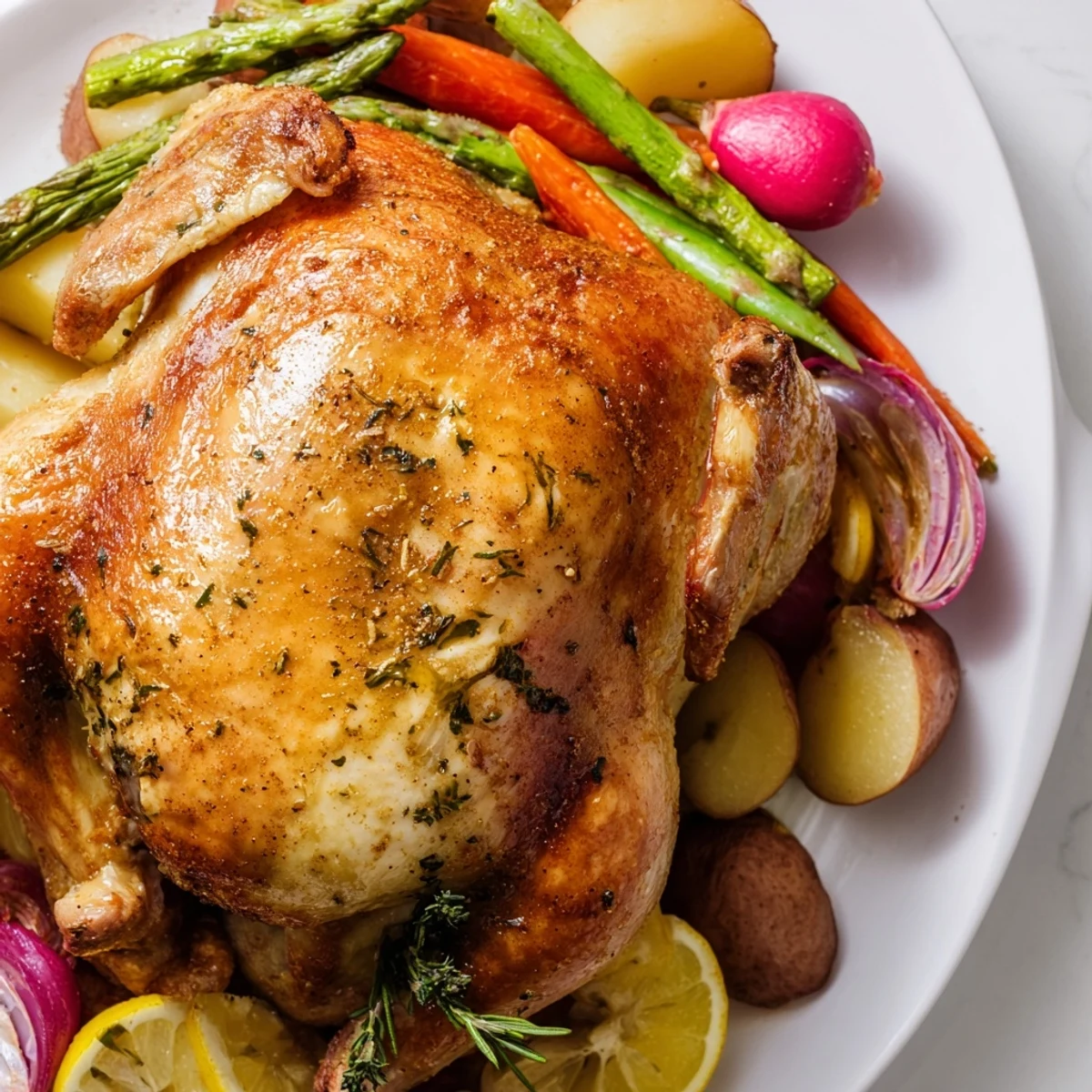
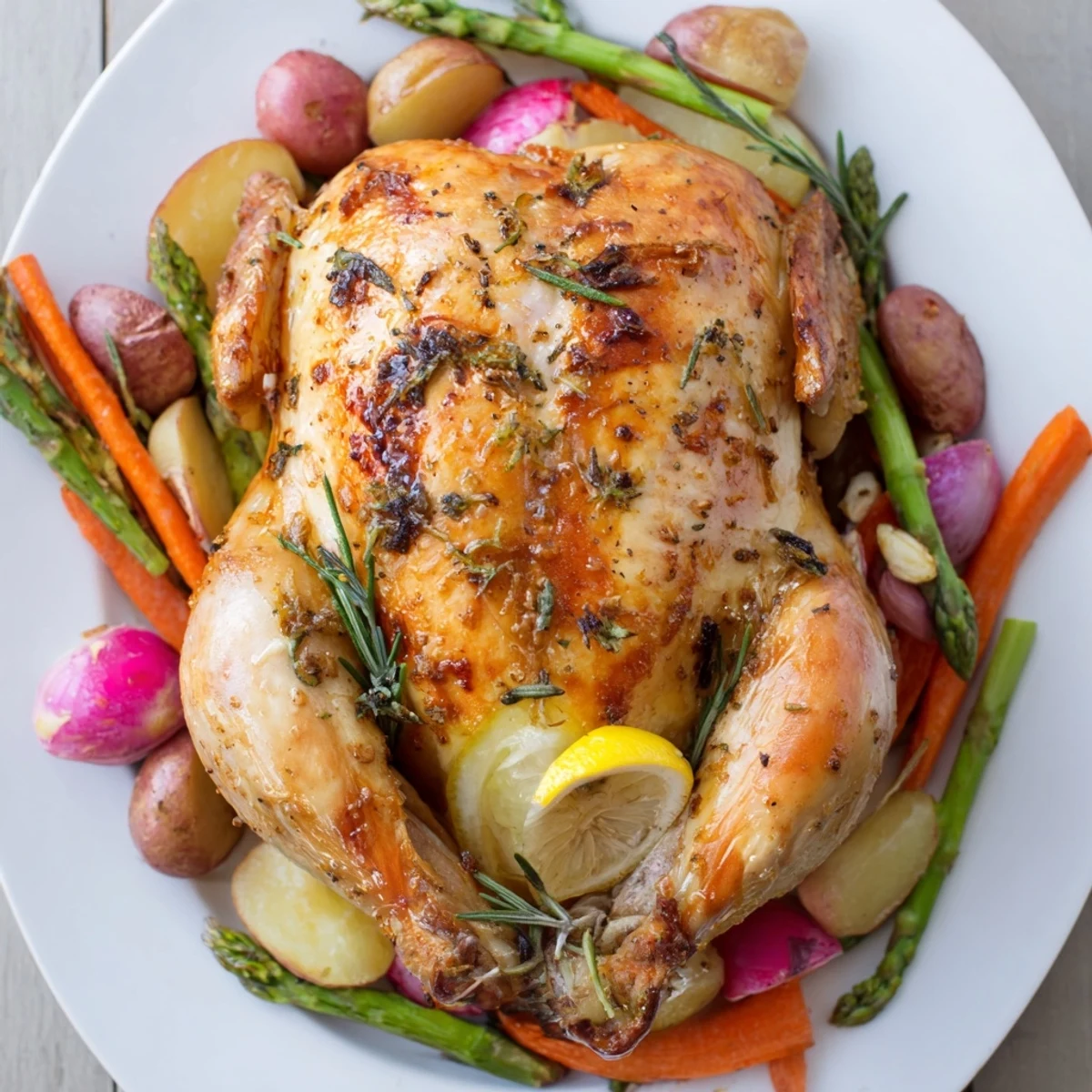
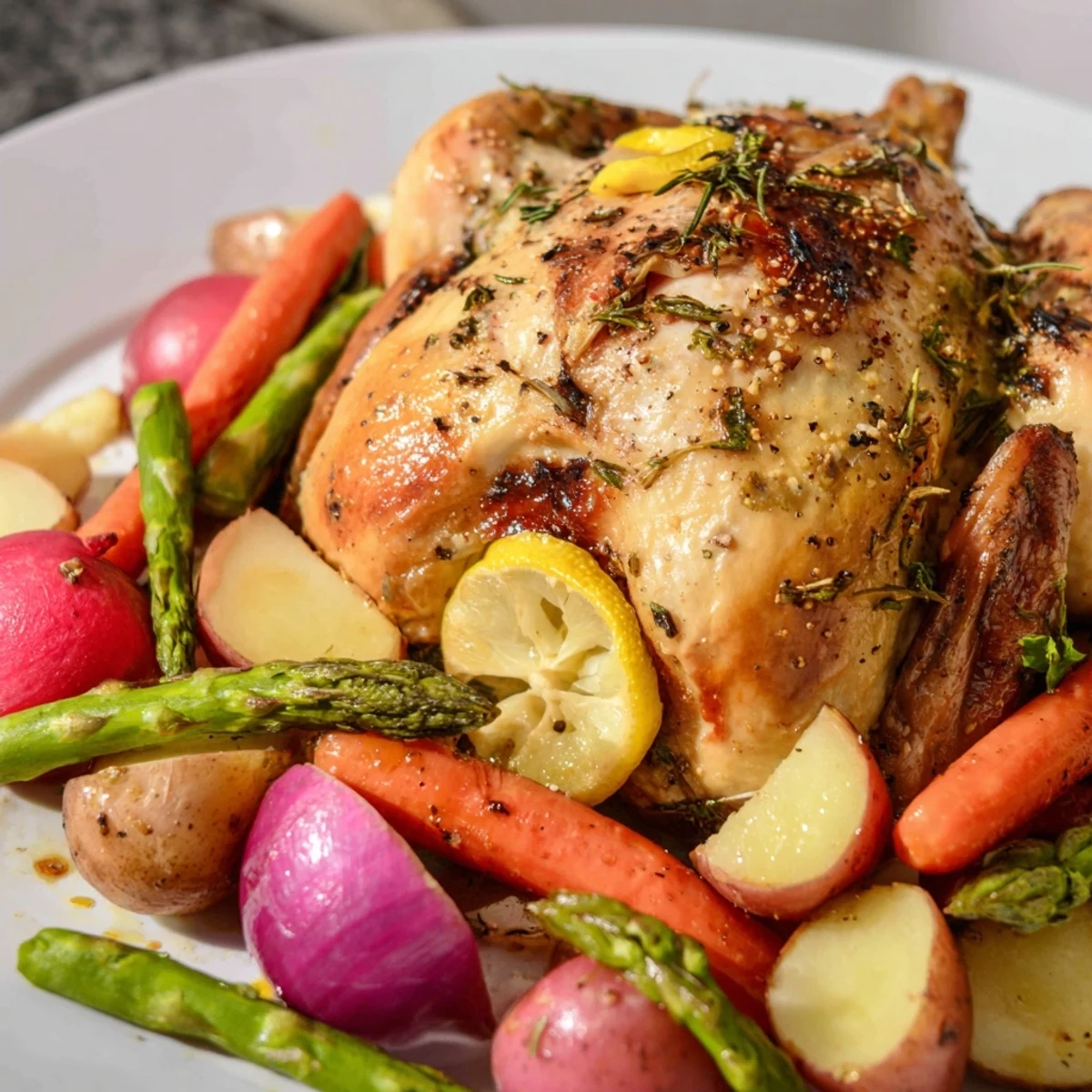
 This dish features a whole chicken seasoned with lemon, garlic, thyme, and rosemary, roasted to golden perfection. Accompanied by a medley of baby potatoes, carrots, asparagus, radishes, sugar snap peas, and red onion, all tossed with olive oil and sea salt, it creates a balanced and nourishing meal. The chicken rests after roasting to retain juiciness, while the vegetables develop tender flavors. It's an ideal main course showcasing fresh spring produce and aromatic herbs.
I stumbled on this combination during that first warm spring when my tiny apartment kitchen finally got decent natural light. The way golden hour hit the roasting pan made everything look impossibly appetizing, even before I took a single bite. Now it is my go to when I want something that looks impressive but actually does most of the work itself.
Last Easter I made this for my family, and my dad who usually claims he is too full for seconds went back for thirds. The house smelled like herbs and roasting garlic for hours, which is basically the best kind of air freshener imaginable.
Ingredients
- Whole chicken: Room temperature meat roasts more evenly, so pull it out of the fridge about 30 minutes before cooking
- Olive oil: Helps the seasoning cling and promotes that gorgeous crispy skin we all want
- Lemon: Stuffing the cavity with lemon halves releases aromatic steam that keeps the meat from drying out
- Garlic cloves: Smashed cloves mellow as they roast, becoming sweet and spreadable
- Fresh thyme and rosemary: Woody herbs stand up to high heat better than delicate soft herbs like basil
- Baby potatoes: These cook faster than larger potatoes and get wonderfully creamy inside
- Carrots: Choose similar sized pieces so everything finishes at the same time
- Asparagus: Add these later so they do not turn into sad mushy strings
- Radishes: Roasting completely transforms their peppery bite into something almost sweet
- Sugar snap peas: They add a bright fresh crunch that balances all the roasted flavors
- Red onion: Wedges caramelize beautifully and become almost like a vegetable confit
Instructions
- Preheat and prep:
- Get your oven to 200°C with plenty of time to spare, and pat that chicken completely dry with paper towels
- Season the bird:
- Rub olive oil all over the skin and inside the cavity, then sprinkle generously with salt and pepper
- Add aromatics:
- Stuff the cavity with lemon halves, smashed garlic, thyme, and rosemary
- Truss the chicken:
- Tie the legs together with kitchen twine and tuck the wings underneath so nothing burns
- Prep the first round of vegetables:
- Toss potatoes, carrots, and onion wedges with olive oil, salt, and pepper in a large bowl
- Arrange for roasting:
- Place chicken breast side up on a roasting rack and scatter the seasoned vegetables underneath
- Start the roast:
- Cook for 40 minutes until the chicken is starting to turn golden
- Add delicate vegetables:
- Throw in asparagus, radishes, and sugar snap peas, tossing them with the pan juices
- Finish roasting:
- Cook another 30 minutes until the skin is deep gold and crisp, and juices run clear when you pierce the thigh
- Rest before carving:
- Let the chicken sit for 10 minutes so the juices redistribute through the meat
 Save to feedthepins
 My friend Sarah said she does not even like chicken skin, but she ate every crispy bit off her serving and asked if there was more. That is when I knew this recipe was a permanent keeper.
Making It Your Own
Spring vegetables change quickly at the market, so use whatever looks fresh and vibrant. Baby turnips, fennel bulbs, or even young peas would all work beautifully here.
Wine Pairing Magic
A chilled Sauvignon Blanc cuts through the richness while a buttery Chardonnay complements the roasted vegetables. Either way, pour yourself a glass while the chicken rests.
Leftovers Worth Anticipating
Cold roasted chicken makes the best sandwiches the next day, piled high with arugula and a little grainy mustard. The vegetables reheat beautifully in a warm skillet with a fried egg on top.
- Save any pan juices to drizzle over reheated portions
- Pick the carcass clean for soup or stock later in the week
- Extra vegetables can be chopped into a frittata or grain bowl
 Save to feedthepins
 There is something deeply satisfying about a one pan meal that tastes like you spent hours on it. Enjoy every bite.
Recipe Q&A
- → What temperature is best for roasting the chicken?
-
Preheat your oven to 200°C (400°F) for optimal roasting, ensuring crispy skin and juicy meat.
- → Can I substitute the spring vegetables?
-
Yes, baby turnips or fennel are excellent alternatives to the suggested spring vegetables for varied flavors.
- → How do I know when the chicken is fully cooked?
-
The chicken skin should be golden and crisp, juices running clear when pierced at the thigh, indicating doneness.
- → Why should the chicken rest after roasting?
-
Resting the chicken for 10 minutes allows juices to redistribute, resulting in moist and tender meat.
- → What herbs enhance the flavor best?
-
Fresh thyme and rosemary complement the chicken and vegetables, adding fragrant and savory notes.