
 Save to feedthepins
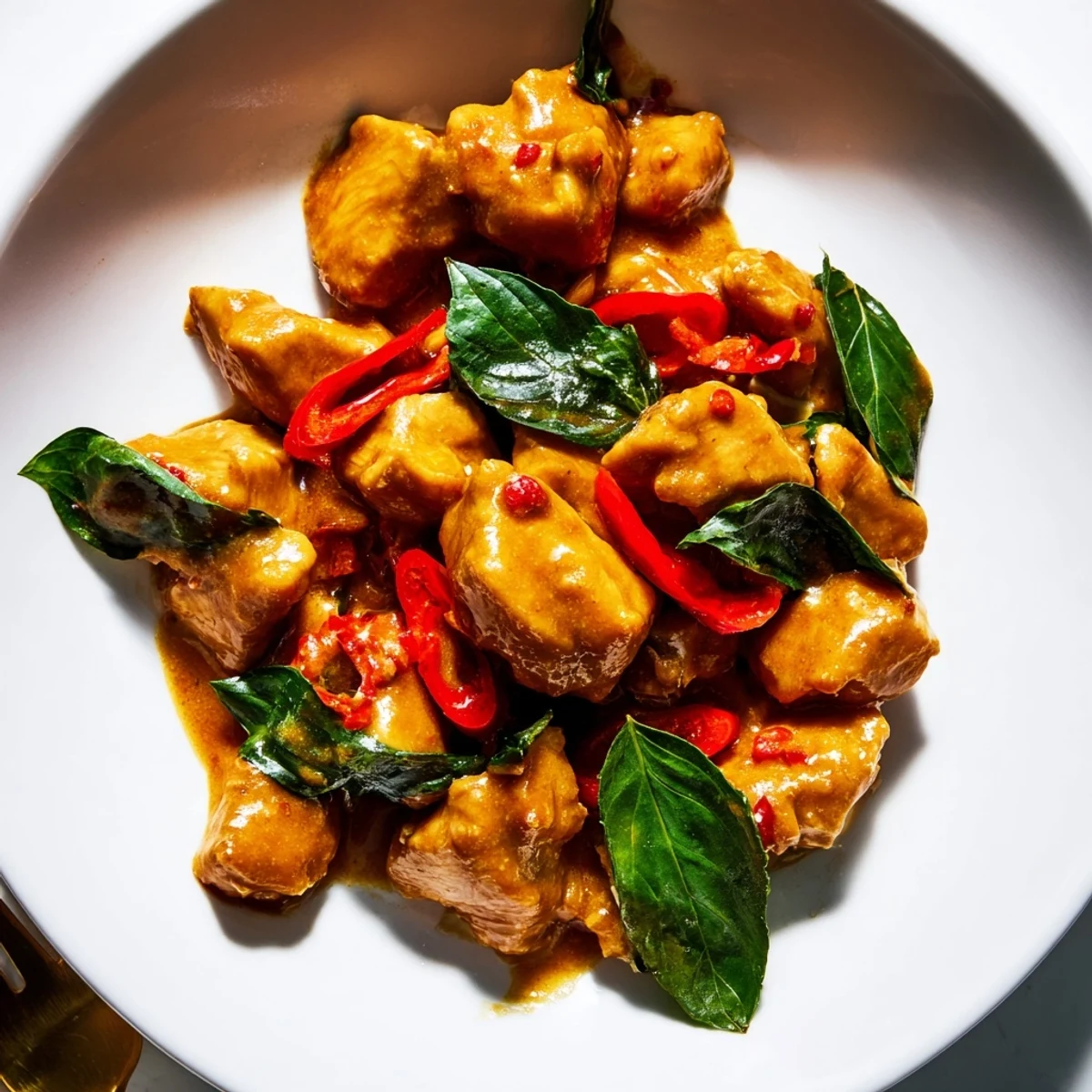
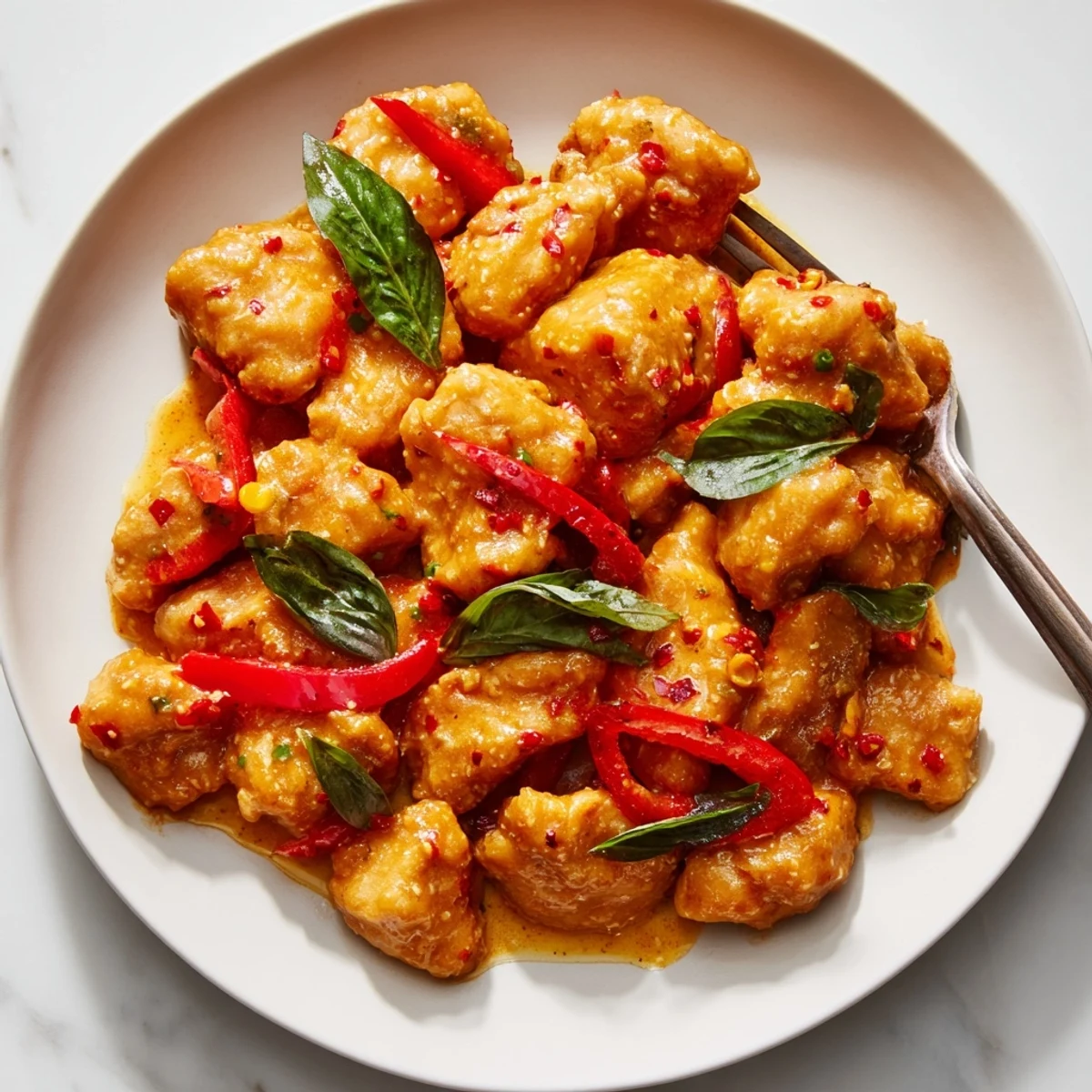
 This Thai-inspired dish features tender chicken breast pieces pan-seared until golden, then simmered in a luscious coconut curry sauce infused with garlic, ginger, and red bell pepper. The sauce balances rich coconut milk with savory fish sauce, brown sugar, and soy sauce, creating layers of sweet and savory depth. Fresh basil leaves stirred in at the end add bright, herbal notes that cut through the creamy richness. The entire dish comes together in just 40 minutes, making it perfect for busy weeknights when you crave something special without the fuss. Serve over fluffy jasmine rice with lime wedges to squeeze over the top—the acidity brightens all those warm spices beautifully.
The first time I made this curry, my apartment smelled so incredible that my neighbor actually knocked on my door to ask what I was cooking. That moment when the red curry paste hits the hot oil and releases all those aromatic spices, it's absolutely intoxicating.
I've served this to dinner guests who swore it must have come from their favorite Thai restaurant. There's something about the combination of coconut milk and red curry paste that transforms ordinary chicken into something extraordinary.
Ingredients
- 1.5 lbs boneless skinless chicken breasts: Cut into bite-sized pieces so they cook evenly and soak up all that sauce
- 1/2 tsp salt and 1/4 tsp black pepper: Simple seasoning that layers beautifully with the bold curry flavors
- 2 tbsp vegetable oil: Has a high smoke point perfect for getting that nice sear on the chicken
- 1 medium onion, finely chopped: Builds the savory foundation of the sauce
- 3 cloves garlic, minced: Fresh garlic makes such a difference here, dont use the jarred stuff
- 1 tbsp fresh ginger, grated: Adds that warm, zesty kick that cuts through the rich coconut milk
- 2 tbsp Thai red curry paste: This is the flavor powerhouse, look for one with good color and aroma
- 1 can (14 oz) coconut milk: Full fat is definitely worth it here for that luxurious mouthfeel
- 1 tbsp fish sauce: Dont be intimidated by the smell, it adds essential umami depth
- 1 tbsp brown sugar: Balances the heat and saltiness with just the right sweetness
- 1 tbsp soy sauce: Use tamari if you need it gluten-free
- 1 red bell pepper, thinly sliced: Adds beautiful color and a subtle sweetness
- 1 cup fresh basil leaves, torn: Thai basil is traditional but Italian works perfectly fine
Instructions
- Season the chicken:
- Sprinkle the salt and pepper evenly over the chicken pieces, tossing to coat everything well
- Sear the chicken:
- Heat oil in a large skillet over medium-high heat, add chicken and cook 3 to 4 minutes until browned but not fully cooked through, then remove to a plate
- Build the aromatics:
- In the same skillet, sauté onion for 2 to 3 minutes until softened, then add garlic and ginger for 1 minute until fragrant
- Bloom the curry paste:
- Stir in the red curry paste and cook for 1 minute, letting those spices wake up and release their oils
- Create the sauce:
- Pour in coconut milk, fish sauce, brown sugar, and soy sauce, stirring well to combine everything into a smooth sauce
- Simmer together:
- Return chicken to the skillet with red bell pepper, bring to a simmer, then cover and cook 10 to 12 minutes until chicken is cooked through and sauce has slightly thickened
- Finish with basil:
- Remove from heat and stir in fresh basil leaves just until they wilt, then serve immediately over rice
 Save to feedthepins
 This dish has become my go-to when I want to make something that feels special but doesn't require hours in the kitchen. My partner always requests it on rainy days when we need something warm and comforting.
Getting The Right Texture
I've learned that cutting the chicken into uniform pieces is crucial for even cooking. If some pieces are too large, they'll still be raw when the smaller ones are done.
Adjusting The Heat Level
Some curry pastes are milder than others, so I always taste the sauce after adding the paste. If it needs more kick, a pinch of red pepper flakes works beautifully.
Make Ahead Strategy
The sauce actually develops even more flavor if you make it a day ahead and reheat gently. Just hold off on adding the basil until you're ready to serve.
- Cook jasmine rice while the curry simmers so everything is ready at once
- Set out lime wedges and extra basil for guests to customize their bowls
- This curry reheats beautifully for lunch the next day
 Save to feedthepins
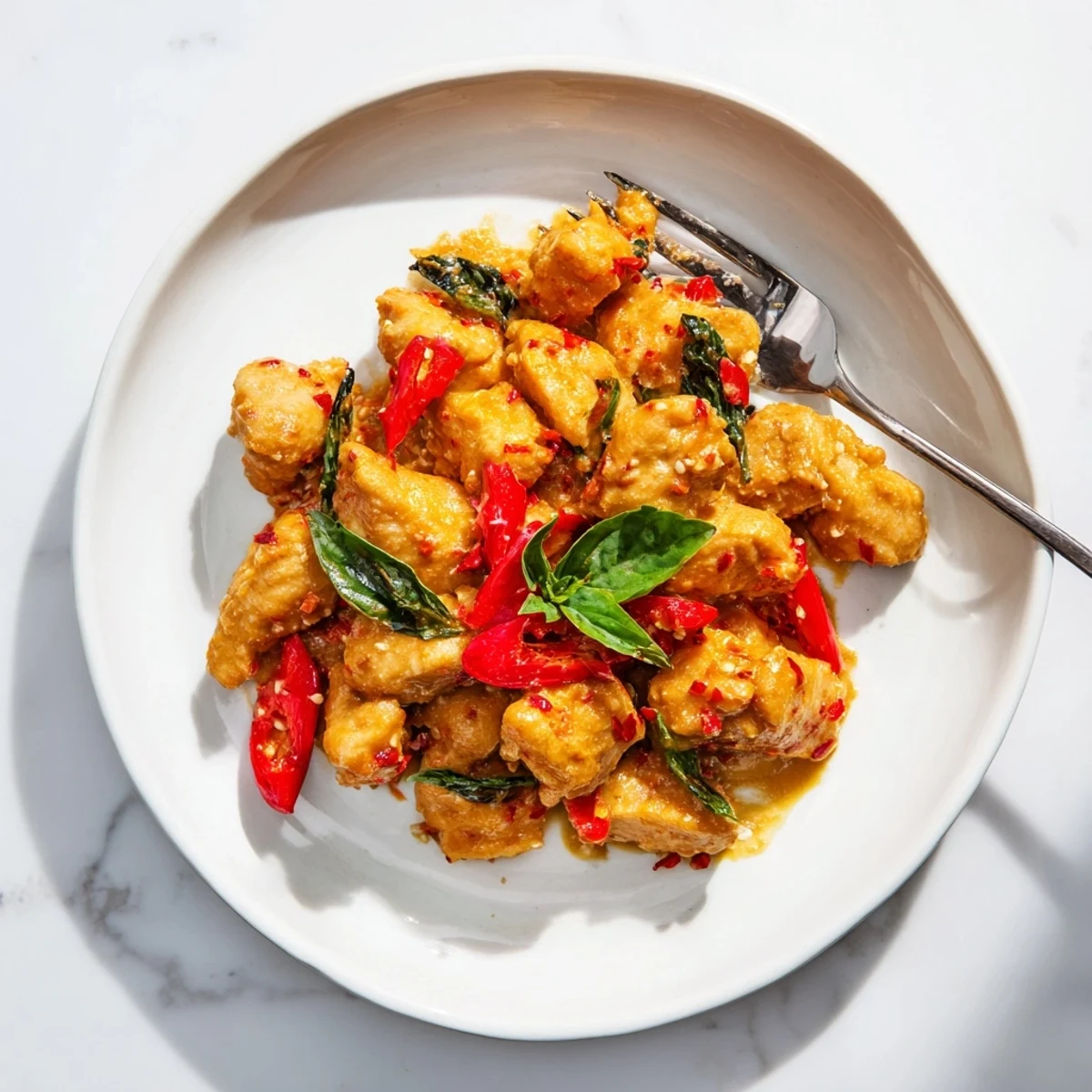
 There's something so satisfying about spooning that fragrant sauce over steaming rice and watching it soak in. This is the kind of comfort food that makes any weeknight feel like a occasion.
Recipe Q&A
- → Can I make this dish spicier?
-
Absolutely. Add chopped fresh chili peppers or red pepper flakes when you stir in the curry paste. You can also increase the amount of red curry paste to 1.5 tablespoons for more heat throughout the sauce.
- → What's the best way to store leftovers?
-
Store cooled leftovers in an airtight container in the refrigerator for up to 3 days. The flavors actually develop and deepen overnight. Reheat gently on the stovetop over medium-low heat, adding a splash of coconut milk if the sauce has thickened too much.
- → Can I use Thai basil instead of regular basil?
-
Thai basil is authentic and adds a lovely anise-like note that pairs beautifully with curry flavors. However, Italian basil works perfectly well if that's what you have available—just add it at the very end to preserve its fresh taste.
- → Is there a substitute for fish sauce?
-
If you need to avoid fish sauce, try substituting with soy sauce plus a pinch of salt, or use vegan fish sauce available at specialty stores. The flavor profile will shift slightly but still deliver satisfying umami notes.
- → Can I make this dairy-free?
-
This dish is naturally dairy-free as written. Coconut milk provides all the creamy richness without any dairy products. Just ensure your curry paste and other condiments don't contain hidden dairy ingredients by checking labels carefully.
- → What protein alternatives work well?
-
Firm tofu cubes, shrimp, or even sliced pork tenderloin all work beautifully with this sauce. Adjust cooking times accordingly—shrimp needs just 3-4 minutes, while tofu can simmer longer to absorb those aromatic flavors.